Tire problems do not always announce themselves with a flat, a blowout, or a warning light. Sometimes they show up more quietly. At our shop, one of the things we look for during inspections is dry rot, because it is one of those tire issues that many drivers do not notice until the damage is already getting serious.
A tire can still have decent tread and still be unsafe if the rubber itself is aging badly. That is what makes dry rot so tricky. People often look at tread depth and assume the tire must still be fine. But tires are made of more than tread. The rubber compound, the sidewalls, and the overall structure all matter too. Once the rubber starts drying out and cracking, the tire is telling you that age and exposure are starting to win.
The good news is that dry rot usually gives visible clues if you know what to look for. The better news is that catching it early can help you replace a bad tire before it turns into a roadside problem.
What Tire Dry Rot Actually Is
Dry rot is the common term drivers use for rubber deterioration that happens as tires age and lose flexibility. Over time, the rubber in a tire can dry out, harden, and begin to crack. Heat, sun exposure, ozone, long periods of sitting, and general age all contribute.
A healthy tire should stay flexible enough to grip the road and handle normal stress without the surface breaking down. A dry-rotted tire loses some of that healthy flexibility. The rubber begins showing small cracks, especially in the sidewall or between tread blocks, and those cracks can grow worse over time. We think of dry rot as a warning sign that the tire is aging out, even if the tread does not look worn down yet.
Why Dry Rot Matters So Much
A dry-rotted tire is not just ugly or a little old looking. Cracked rubber can mean the tire is becoming weaker and less dependable. As the deterioration spreads, the tire becomes more vulnerable to leaks, structural weakness, and failure under heat and road stress.
That matters even more in summer, during highway driving, or when the vehicle is carrying extra weight. A tire that seems okay around town may be much less trustworthy at speed or in hot weather once the rubber has started breaking down. A tire can have life left on paper and still not be a tire we would want a customer depending on.
The Most Obvious Sign Is Cracking In The Sidewall
If you want the most common visual clue, start with the sidewall. Dry rot often shows up there first because the sidewall is exposed to sun, weather, and constant flexing. The cracks may start small and shallow, almost like fine lines in the rubber, then become more noticeable as the tire continues aging. Some drivers describe it as the tire looking weathered or dried out. That is a pretty fair description. The rubber stops looking healthy and starts looking brittle.
Small surface cracking does not always mean immediate failure, but it does mean the tire deserves closer attention. If the cracks are easy to spot, spreading, or look deeper than light surface checking, the conversation becomes more urgent.
Cracks Between The Tread Blocks Count Too
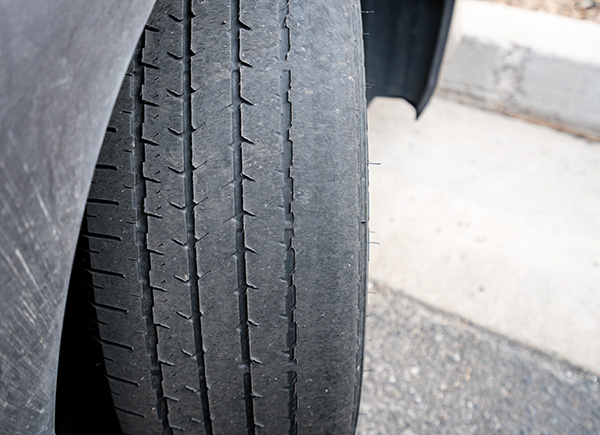
A lot of people only look at the tread depth and the outer sidewall. It is also worth checking the spaces between the tread blocks. Dry rot can show up there too, and it can be easy to miss if you are not looking closely. We recommend checking tires in good light instead of doing a quick glance in a dark garage or parking lot. The early signs are often subtle enough that poor lighting hides them.
The Rubber May Feel Harder Than It Should
Tires that are drying out often lose some of their normal feel. The rubber may seem harder, stiffer, or less healthy overall. Most drivers are not going to squeeze a tire and diagnose it by touch alone, but when we inspect aging tires, the change in rubber condition is often pretty noticeable. A healthy tire looks and feels like rubber that still has life in it. Whereas, a dry-rotted tire often looks tired before it completely fails.
Long Sitting Is A Big Risk Factor
One of the biggest causes of dry rot is not actually driving too much. It is often driving too little. Vehicles that sit for long periods are especially prone to tire aging because the tires are not being used regularly and may spend more time exposed to sun, heat, and static pressure in the same position.
This is very common with:
- Spare vehicles
- RVs and trailers
- Seasonal cars
- Collector cars
- Cars parked outside for long stretches
A low mileage vehicle can still have old, dry-rotted tires if the rubber has simply been aging in place for years.
Age Matters More Than Many Drivers Realize
This is another important point. Tires age even if they are not worn out. A set of tires can have plenty of tread left and still be near the end of its safe life because of age and environmental exposure.
At our shop, when we see dry rot, we are usually thinking about age just as much as visible cracking. A tire that has been on the vehicle for many years is a lot more likely to develop rubber deterioration than a newer tire, even if the mileage is relatively low.
Sun And Heat Speed The Process Up
Parking outside all the time, especially in hot sunny climates, can accelerate dry rot. UV exposure and heat are hard on rubber. Over time, they help dry the tire out and make cracking more likely. Tires in hot climates often need closer attention even if they still have usable tread.
What Dry Rot Usually Looks Like In Real Life
A few of the most common signs include:
- Small cracks in the sidewall
- Fine cracking between tread blocks
- A weathered or brittle appearance
- Rubber that looks faded or aged
- Cracks that are growing more visible over time
The bigger the cracks, the less comfortable we are with the tire’s long-term safety.
When Dry Rot Moves From Mild To Dangerous
Not every little crack means the tire is moments from failing. Mild surface checking may be an early warning, while deeper or more widespread cracking becomes much more serious. The trouble is that most drivers are not in a great position to judge exactly where that line is, which is why inspection matters.
If the cracking is easy to see from a short distance, appears around multiple areas of the tire, or is paired with any bulging, pressure loss, or visible weakness, we would consider that much more concerning.
At our shop, we would much rather inspect a suspicious tire early than see someone keep driving on it until heat or highway speed turns the issue into a failure.
The Best Rule Is To Look Beyond Tread
If you take one thing away from this, let it be this. Tread depth is only part of tire health. A tire can still have decent tread and still be too old or too cracked to trust. If the rubber is dry-rotted, the tire is already telling you it is not in great condition anymore. Call B & L Automotive in Newport News, VA today or stop by to schedule a tire inspection.