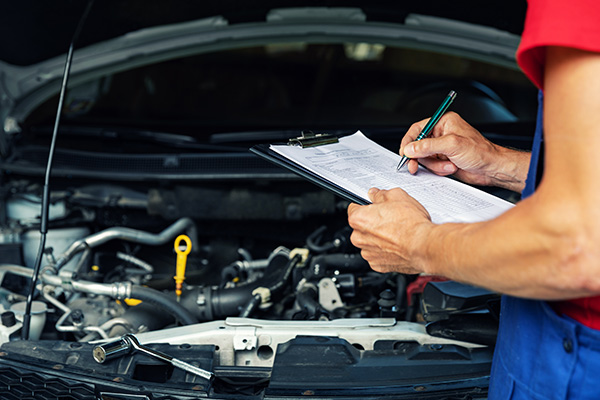
The same car can be quiet on Monday and make a new noise by Friday. That is what makes auto repair questions so frustrating. Drivers are not always dealing with a dead vehicle. They are dealing with a car that still moves, but suddenly feels a little less trustworthy.
That middle stage is where good answers help.
Here are the auto repair questions drivers ask most often, along with practical answers that can help you decide what needs attention now and what can be planned.
1. Why Is My Check Engine Light On?
The check engine light can come from many systems. Misfires, oxygen sensor issues, EVAP leaks, fuel mixture problems, catalytic converter concerns, thermostat issues, and sensor faults can all trigger it.
A steady light usually means the vehicle needs diagnostics soon. A flashing check engine light is more urgent because it often points to an active misfire. If the light is flashing and the engine is shaking, avoid normal driving and schedule service quickly.
2. How Do I Know If My Brakes Need Repair?
Brake problems often start with noise or feel. Squealing, grinding, vibration, a soft pedal, pulling, or a hot smell near one wheel are all clues. Grinding usually means the pads have worn too far and may already be damaging the rotors.
A brake check should include pads, rotors, calipers, hoses, hardware, and brake fluid. Looking only at pad thickness can miss a sticking caliper or fluid problem.
3. Why Does My Car Shake While Driving?
A shake at highway speed often points to tire balance, uneven tire wear, a bent wheel, or tire damage. A shake while braking may point toward rotor issues, brake wear, or loose front-end parts.
The timing of the shake matters. Does it happen at one speed, during braking, under acceleration, or all the time? That detail helps our technicians narrow the source instead of chasing the wrong system.
4. What Does It Mean If My Car Pulls To One Side?
Pulling can come from tire pressure, alignment problems, worn suspension parts, brake drag, or uneven tire wear. If the pull happens only when braking, the brake system needs closer attention.
If the steering wheel sits crooked after hitting a pothole or curb, alignment or steering parts may have shifted. Waiting can lead to uneven tire wear, and tires are too expensive to let that happen quietly.
5. How Often Should I Change My Oil?
Start with the manufacturer’s schedule, then adjust for real driving. Short trips, stop-and-go traffic, heat, towing, and long idle time can be harder on oil than easy highway miles.
Oil level matters too. A vehicle can be current on oil changes and still run low if it leaks or burns oil between services. Check the dipstick regularly, especially before long drives.
6. Why Is My Car Overheating?
Overheating can result from low coolant levels, a leak, a stuck thermostat, a weak radiator fan, a bad water pump, a clogged radiator, or a pressure cap problem. Coolant does not disappear without a reason.
If the temperature warning comes on, pull over safely and let the engine cool. Do not open the coolant cap while the engine is hot. Repeated overheating can quickly damage gaskets, seals, and metal surfaces.
7. What Fluid Is Leaking From My Car?
Color, smell, and location help identify leaks. Engine oil is usually amber to dark brown and slick. Coolant may be green, orange, pink, yellow, or blue, and often has a sweet smell. Transmission fluid may be red, pink, or brown. Brake fluid near a wheel is a safety concern.
A clean driveway does not always mean there is no leak. Fluid can collect on shields, dry on hot parts, or spread before it drips. A leak inspection is worth scheduling if the spot keeps returning.
8. Why Won’t My Car Start?
A no-start can come from the battery, alternator, starter, cables, terminals, grounds, fuel delivery, or ignition system. Rapid clicking often points toward weak battery power or a poor connection. One solid click can point toward the starter, though voltage still needs to be checked.
If the car starts after a jump but dies again later, the charging system needs to be tested. Replacing the battery without checking the alternator can leave the same problem waiting.
9. What Maintenance Helps Prevent Bigger Repairs?
Oil changes, fluid checks, brake checks, tire rotations, battery testing, belt and hose checks, filter replacement, and leak checks all help. None of these services is exciting, but they catch wear before it spreads.
Regular maintenance gives you a chance to plan. A weak battery, low coolant level, worn brake pad, or tire wear pattern is much easier to handle before it interrupts your week.
10. How Do I Know Which Repair Should Come First?
Safety and damage risk come first. Brakes, steering problems, overheating, oil pressure warnings, flashing check engine lights, major leaks, and starting issues usually need faster attention.
A good shop should explain what is urgent, what can wait, and what should be watched. You should leave with a clear plan, not a pile of confusing recommendations.
Get Auto Repair In Newport News, VA, With B & L Automotive
If your vehicle has a warning light, a leak, noise, vibration, a starting problem, a brake concern, or a maintenance question, B & L Automotive in Newport News, VA, can perform an inspection and explain what your car needs in clear terms.
Schedule a visit and get practical answers before a small concern turns into a repair you did not plan for.